
Piping Engineering Department: Department Service Portfolio
BIM-Integrated Piping Engineering: Detailed 2D and 3D piping design utilizing BIM workflows and fully coordinated with central engineering databases to ensure high-precision, clash-free design environments.
Advanced 3D Piping Modeling: Full 3D modeling of complex piping systems using Autodesk Plant 3D and advanced CAD platforms to enable early-stage visualization, spatial verification, and design simulation.
Piping Stress Analysis & Flexibility Calculations: Thermal, pressure, dynamic, and mechanical stress analysis utilizing industry-standard software (such as AutoPIPE and Simflex) to ensure structural integrity under varied operating loads.
Plant Layout & Equipment Arrangement: Optimizing equipment, utility, and piping spatial layouts with a strict focus on ergonomics, accessibility, operational safety, and constructability.
Piping & Support Systems Engineering: Routing design, support selection, structural anchors, guides, and Pipe Rack integration, accounting for thermal expansion, dynamic loads, and field installation sequences.
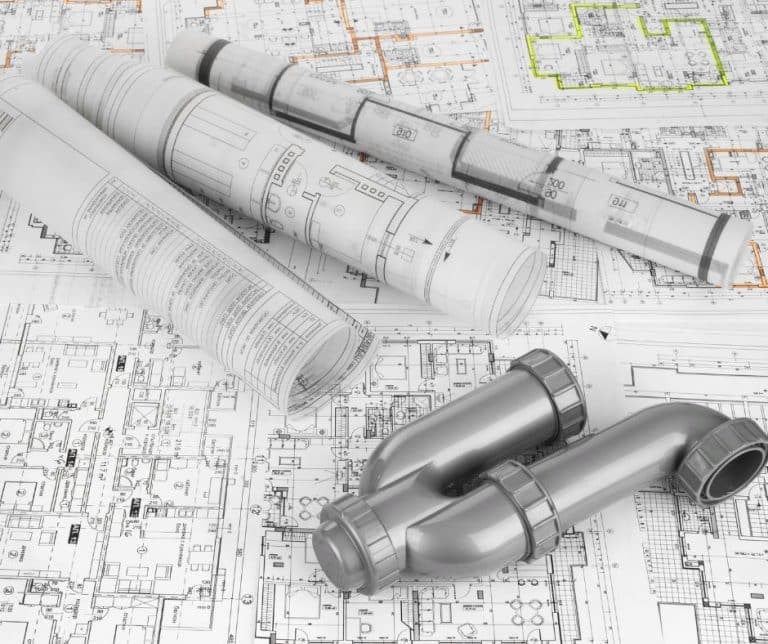
Isometric Generation & Execution Deliverables: Automated extraction of detailed isometric drawings containing comprehensive material, fabrication, and field installation data.
Spatial Coordination & 3D Clash Detection: Performing interdisciplinary superposition and clash detection against civil, structural, architectural, electrical, and I&C models to resolve physical conflicts prior to field execution.
Material Take-Off (MTO) & Technical Specifications: Generating precise Material Take-Offs (MTO), Bill of Materials (BOM), and technical procurement specifications for fabrication, purchasing, and construction.
End-to-End Engineering Delivery: Complete coverage from early concept and Front-End Engineering Design (FEED) to detailed engineering, modeling, isometric extraction, and technical site support.
High-Density & Complex System Engineering: Managing intricate piping networks with dense interface boundaries while maintaining total compliance with safety, operation, and maintenance protocols.
Constructability-Focused Design: Engineering piping systems specifically optimized for ease of off-site pre-fabrication, safe transport, efficient site assembly, and long-term maintenance access.
Early-Stage Risk Mitigation: Leveraging integrated 3D models to eliminate design clashes, accessibility restrictions, and constructability bottlenecks before mobilization, preventing costly field rework and delays.
Cross-Disciplinary Integration: Seamlessly integrating piping systems into the overall plant architecture to deliver a single, unified engineering solution rather than isolated siloed designs.
Engineering-Technology Synergy: Combining BIM methodologies, high-end 3D modeling, and finite element stress analysis with decades of practical field-proven engineering expertise.
Material & Cost Control Precision: Direct data linking between 3D models, MTOs, and isometric drawings for exact quantity tracking, material control, and budget optimization.